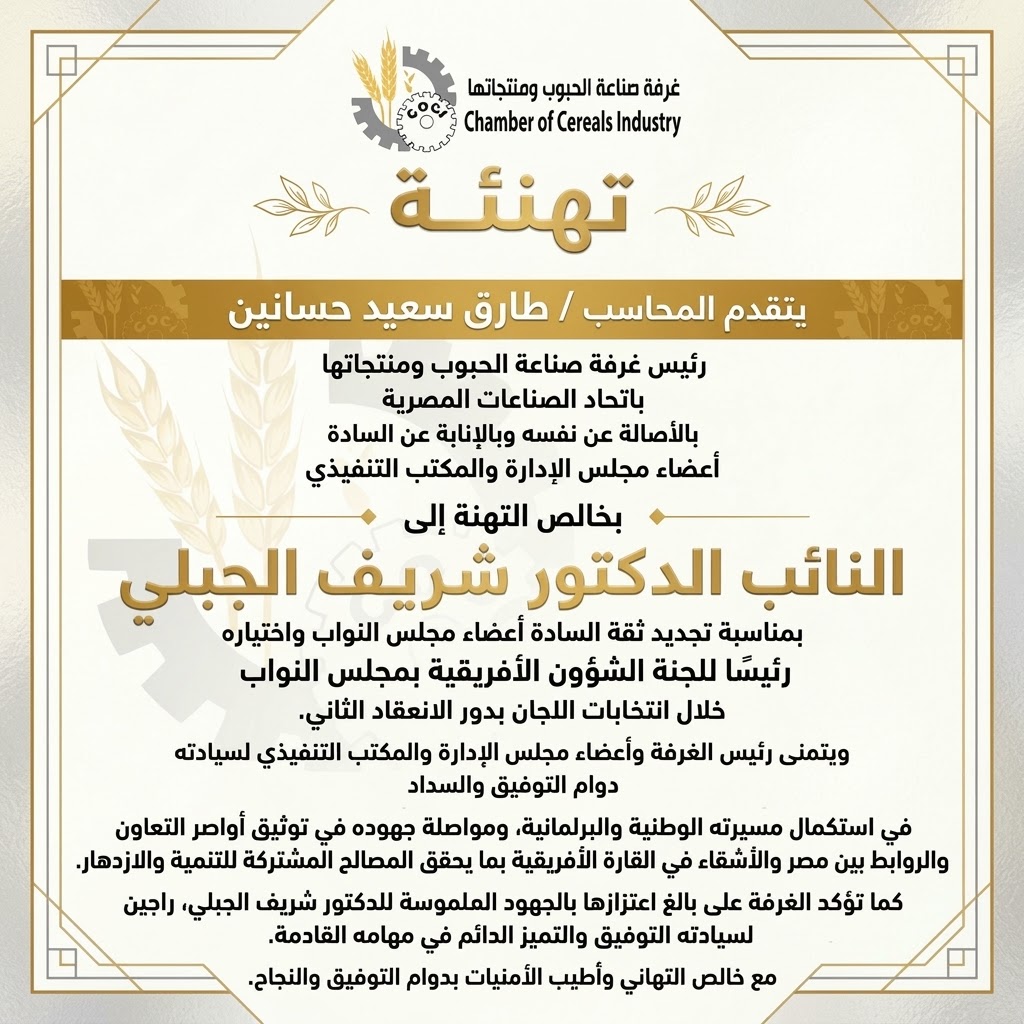
It is one of the industrial chambers included in the Federation of Egyptian Industries, and the chamber is considered a public institution regulated by the provisions of Law No. 21 of 1958 regarding the organization and promotion of industry, as well as Republican Resolution No. 453 of 1958 for the establishment of the industrial chambers.
The Chamber is concerned with the common interests of its members and represents them with the public authorities in supporting and developing industries
The Chamber currently has more than 33,000 members in all its sectors, which are:
Milling with two types: 82% and 72%.
Industry pasta and nutritional kneading.
Rice striking industry.
Baking and all kinds of bread.
– Starch, yeast, and glucose.
The Chamber is managed by an elected board of directors of ten members who are elected from the general assembly of the Chamber and five members who are appointed by the Minister of Industry. Appropriate and solve their problems
It is provided through the various committees that emanate from the Board of Directors to administer the technical affairs of the dump, represented in
Contributions and Membership Affairs Committee
Technical Committee
Media Committee
Export Committee
Training and workforce committee
The Finance Committee
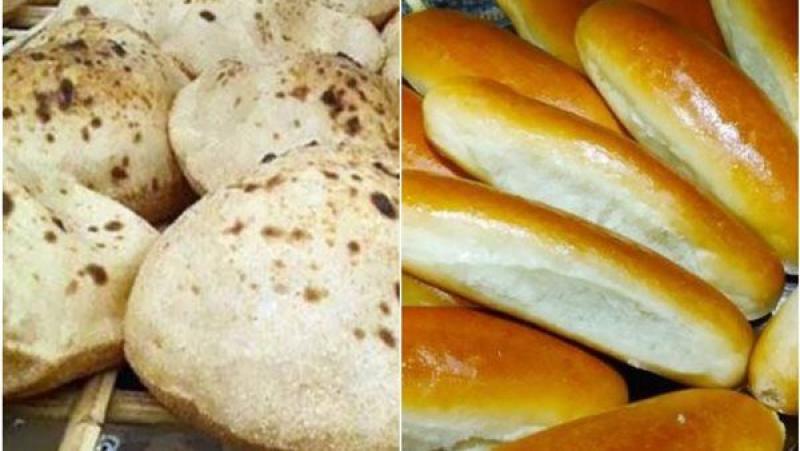
Bread loaf represents a main and vital source of food, and still very important source especially in developing countries.
Rice is considered a new crop in Egypt, as it was planted for the first time in the seventh century. Rice polishing process was very elementary and manual, but as population grow the need for more advanced methods was a must.
Pasta is an essential part that individuals depend upon to suffix their food needs. Pasta industry was first established in Cairo in the year 1890.
The flour extraction division is 72% and the owners of cylinder mills belong to it, which produce 72% of the fine flour for the purpose of various industries such as fino, sweets, pasta, khilafa and Yaris, milling division 72% currently Mr. Engineer / Amr El Enni and Representative / Walid Diab
The flour extraction division 82% and belongs to it the owners of the millers operating in the extraction of flour 82 in favor of the loaf of bread that the state supports. The number of mill owners is between stones and cylinders Stone mills: - The grains are grinded between two stone discs and sift the product in a six-sieve to separate the flour from the apostasy. Cylinder mills: - It is considered the most widely used at the present time and flour is extracted in it by following the stepwise fractionation system, whereby the Androsprem is separated from the wheat grains with a high degree of efficiency. Until recently, Egypt was suffering from the backwardness of mills and imported all its needs of fine flour, which prompted the country to change and modernize the policy of the milling industry in the public and private business sectors, as the shift was made from stone mills to cylinder mills. So many modern mills with advanced technology were established and imported from the most famous countries in the world in the manufacture of grinding equipment. This led to the saving of millions of foreign currencies in addition to the provision of bran needed for the manufacture of fodder. It is chaired by Mr. Hussein Bodi during this session He is at the same time the president of the Millers' Association
Starch: It is a very fine powder that breaks up between the fingers when pressed, practically not dissolved in cold water and alcohol, and is odorless and has a distinctive light taste and has many types: Wheat starch Potato starch Corn Starch Rice starch The starch is used